Nearly 200 years of
New England granite
The story of Fitzwilliam granite is the story of the stone itself — hand-split from the hills of southern New Hampshire by generations of craftsmen, and still here today.
The History of Webb Hill Quarry
The Quarry Opens
Webb Hill Quarry in Fitzwilliam, New Hampshire is documented as active before 1829 by the U.S. Geological Survey. The granite beneath these hills — formed under immense pressure over millions of years — begins its journey to the surface. Scottish stonecutters, led by craftsmen from Aberdeen, are among the first to work the stone.
The Cheshire Railroad Opens
The opening of the Cheshire Railroad transforms the quarrying industry in Fitzwilliam. A 7,000-foot private railroad siding is built specifically to transport stone from Webb Hill to the depot — a testament to the scale and importance of the operation. Fitzwilliam granite can now reach markets across New England and beyond.
The Golden Era of Fitzwilliam Granite
Fitzwilliam becomes one of the three principal granite centers in New Hampshire. The granite industry is the most important business in town for more than fifty years. Webb Hill Quarry supplies stone for landmark buildings across the northeastern United States — from Boston to Chicago to Washington, D.C.
First Church of Christ, Scientist — Boston
The approaches and base of Boston’s First Church of Christ, Scientist are built with granite from Webb Hill Quarry. The building is completed in 1894 and stands today as one of the most recognized landmarks in New England — built on Fitzwilliam stone.
U.S. Geological Survey Documents the Quarry
Geologist T. Nelson Dale documents Webb Hill Quarry in two separate U.S. Geological Survey publications — Bulletin 430 (1909) and Bulletin 738 (1923). Both confirm the quarry was active before 1829. The 1923 report notes the quarry measured approximately 1,300 feet long, 250 feet wide, and up to 35 feet deep.
Fitzwilliam Granite Company
The stone remains. Hand-split, antique weathered, and carrying nearly two centuries of New England character — Fitzwilliam Granite Company sources authentic granite from Webb Hill and makes it available for the finest residential and commercial landscape projects throughout New England.
Webb Hill —
the source of it all
Located half a mile south of Fitzwilliam Depot in Fitzwilliam Township, Webb Hill Quarry was operated by Webb Granite & Construction Company. The stone produced here supplied not just local building projects but landmark structures across the eastern United States.
What makes this granite exceptional is its geology — classified by the USGS as a muscovite-biotite granite of light, very bluish gray color and fine even-grained texture. It is one of the hardest and most durable granites in New England, proven by generations of freeze-thaw cycles in the harshest climate in the region.
The stone that remains at Webb Hill today has been naturally weathering for decades — developing the lichen, patina, and surface character that no freshly quarried stone can replicate.
Approximately 1,300 feet long · 250 feet wide · 6 to 35 feet deep
Muscovite-biotite granite · Light bluish gray · Fine even-grained texture
7,000-foot private railroad siding to Fitzwilliam Depot · Cheshire Railroad
Webb Granite & Construction Company · 40 Crescent Street, Worcester, MA
Bulletin 430 (1909) and Bulletin 738 (1923) · Both authored by T. Nelson Dale
Half a mile south of Fitzwilliam Depot · Fitzwilliam Township · Cheshire County, NH
Buildings That Stand the Test of Time
Fitzwilliam granite has been specified for some of the most significant architectural projects in American history.
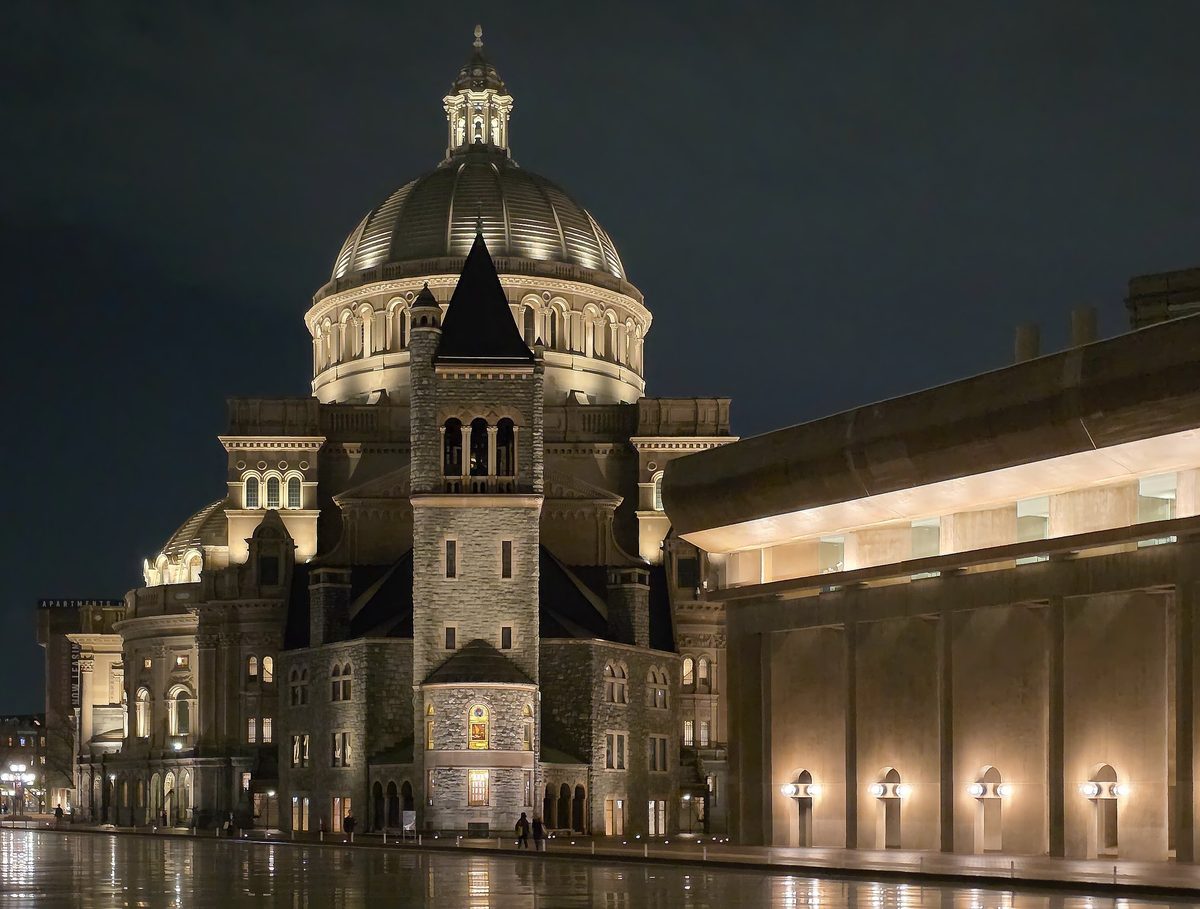
First Church of Christ, Scientist
Approaches and base constructed with Webb Hill granite. Completed 1894. One of New England’s most recognized landmarks.
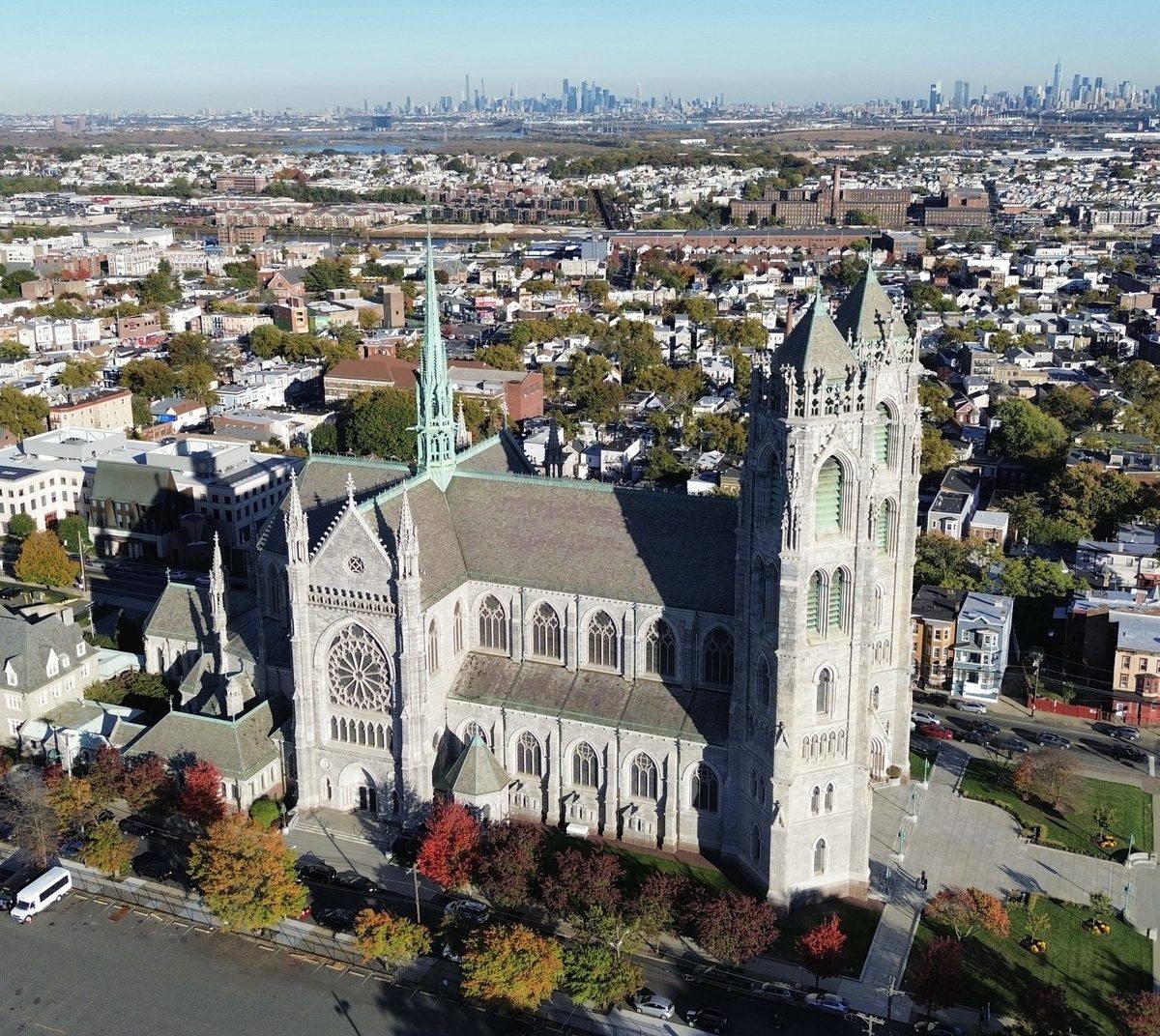
Cathedral of the Sacred Heart
Fitzwilliam granite used in the construction of one of the largest Gothic cathedrals in the United States.
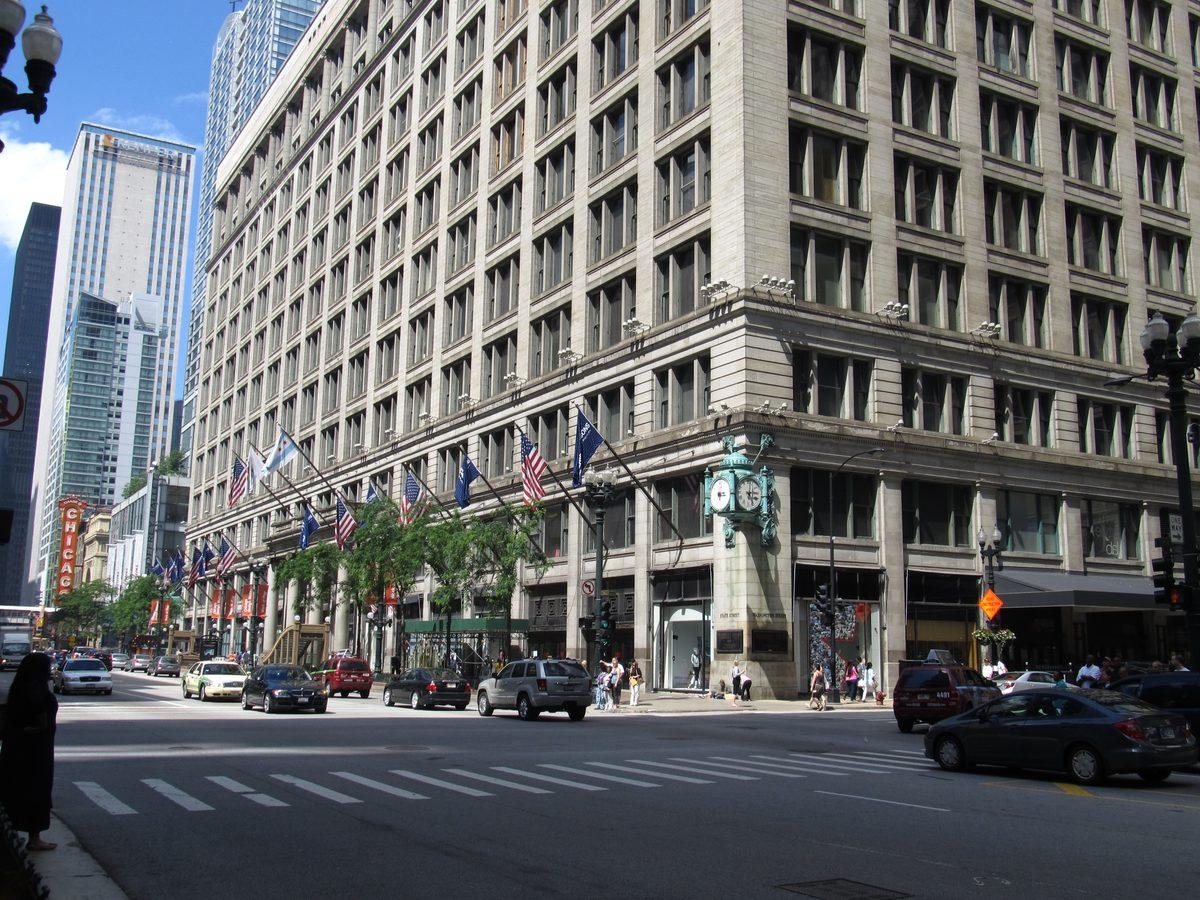
Marshall Field’s
The iconic Chicago department store — one of the greatest retail buildings in American architectural history.
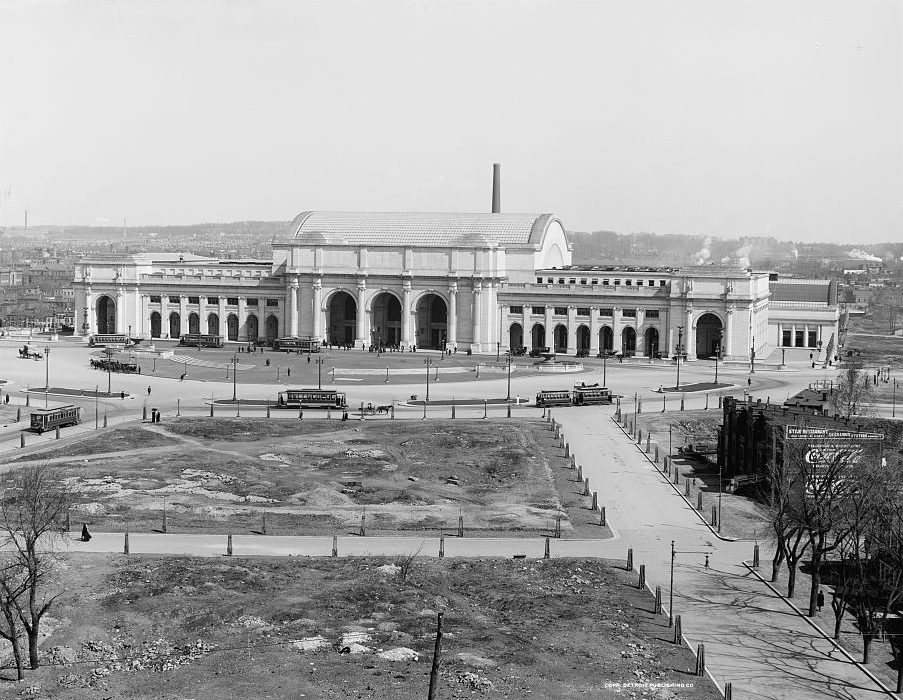
Union Station
One of America’s great Beaux-Arts railway terminals, built with Fitzwilliam granite from the hills of New Hampshire.
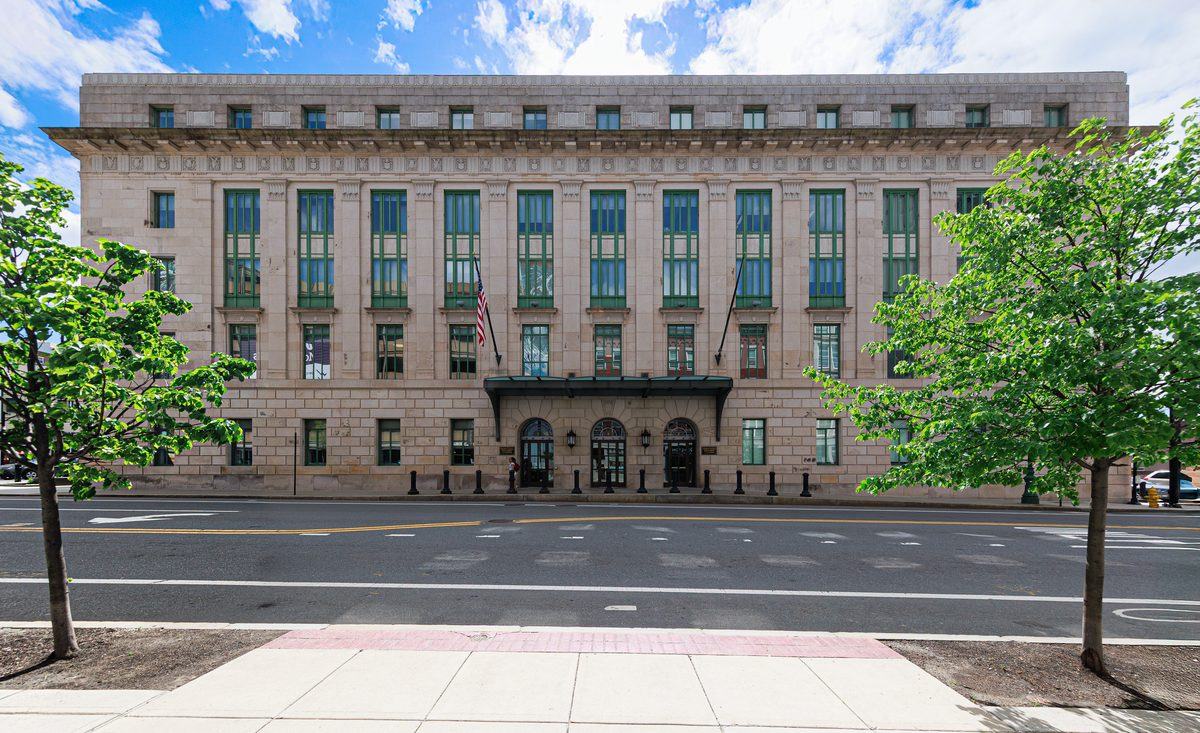
Worcester Court House
A landmark of New England civic architecture, constructed with stone from Webb Hill Quarry.
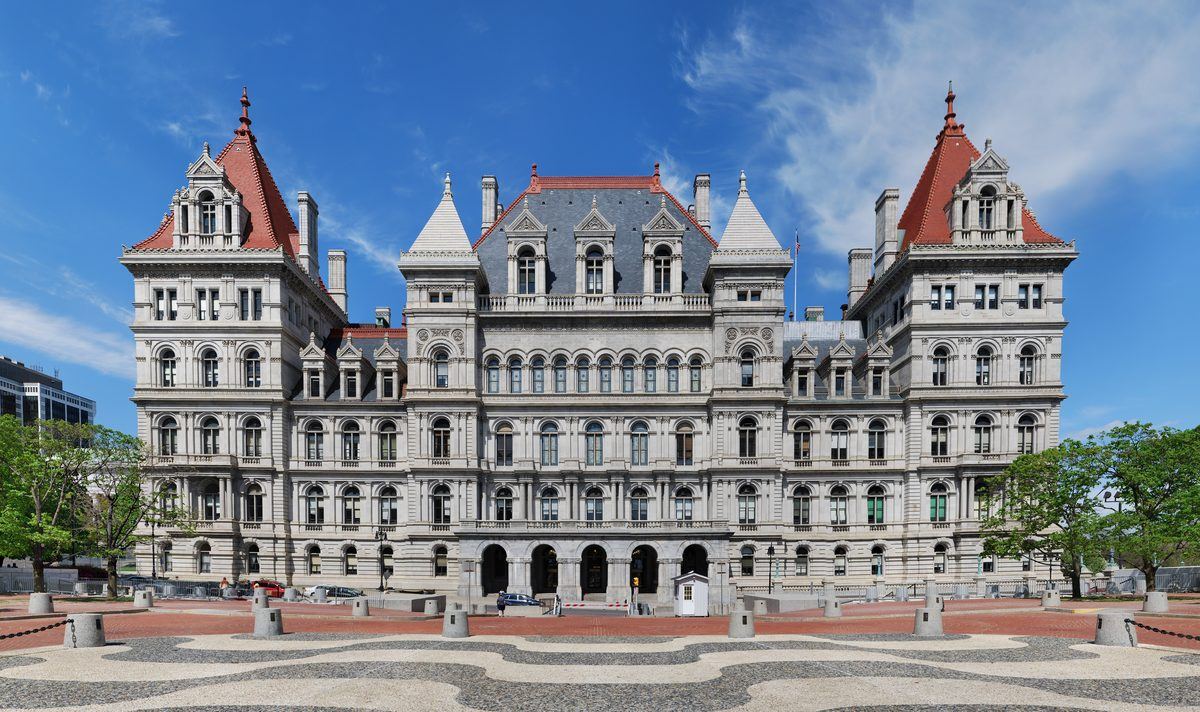
State Capitol Building
The New York State Capitol — one of the most expensive and elaborate government buildings of the 19th century.
From Aberdeen to
Fitzwilliam
The story of Fitzwilliam granite is also the story of the men who shaped it. The first stonecutter to come to Fitzwilliam was John Milne, from Aberdeen, Scotland — a craftsman who recognized in these New Hampshire hills the same quality of granite he had worked in his homeland.
The Scottish stonecutters who settled in Fitzwilliam brought with them centuries of tradition — the knowledge of how stone splits, how it weathers, how it holds. They established the hand-splitting techniques that define our stone to this day.
The granite industry was the most important business in Fitzwilliam for more than fifty years, and for a long time it was one of the three principal granite centers of the state.
FITZWILLIAM HISTORICAL SOCIETYThat heritage lives in every piece of stone we source. When you specify Fitzwilliam granite, you’re not just choosing a material — you’re continuing a tradition that stretches back nearly two centuries.
Norton, John F. The History of Fitzwilliam, New Hampshire, from 1752 to 1887. NY: Burr Printing House.
Dale, T. Nelson. Supplementary Notes on the Granites of New Hampshire. USGS Bulletin 430-F. Washington: Government Printing Office.
Dale, T. Nelson. The Commercial Granites of New England. USGS Bulletin 738. Washington: Government Printing Office. “The quarry, opened before 1829…”
This stone is available for your next project
Nearly 200 years of New England history — hand-split, weathered, and ready to deliver throughout New England.
REQUEST A QUOTE REQUEST A SAMPLE